

How to Become Dangerously Confident (Without Faking It)


You want to be confident. So does everyone. That feeling of being untouchable, like the heroes you grew up admiring. The problem is, you’ve been chasing the wrong thing. We all have.
We think confidence is a feeling that shows up when we’re ready. A trait some people are lucky enough to be born with. It’s neither. And until you understand what it actually is, you’ll keep preparing, consuming, waiting.
While the people who figured it out are already living the life you’re still planning for.
The Trap Nobody Talks About
You know this loop. Maybe better than you’d like to admit.
You’ve been preparing. Consuming. Watching video after video, reading book after book, building rituals around the version of yourself you want to become.
And somewhere in your head, you’ve made a secret deal: once I feel ready, I’ll do it. Once I’m more comfortable, I’ll put myself out there. Once I have more experience, I’ll take the risk.
But here’s what’s actually happening while you wait.
Every time you hold back, your brain takes a note. Every missed opportunity gets logged. And your brain (the world’s most efficient pattern-recognition machine ever built, running purely on evidence, not on wishes) is quietly building a case.
The case that you can’t handle it. That you’re not the type of person who does things like that.
Wake up. Scroll. Avoid the uncomfortable thing. Tell yourself tomorrow. Close the tab. Put down the phone. Tomorrow. Tomorrow. Tomorrow.
That loop doesn’t look dramatic from the inside. It just feels like caution. Like being realistic. Like waiting for the right moment.
But you already know the right moment isn’t coming. The longer you wait, the more evidence you collect against yourself. And confidence doesn’t run on intention. It runs on evidence.
Psychologists call this the avoidance loop. Every time you sidestep a situation that makes you uncomfortable, your brain registers a small hit of relief. And relief feels like reward.
So the brain learns: next time... avoid faster.
The fear doesn’t fade with avoidance. It grows. Research in behavioral neuroscience shows that habitual avoidance physically rewires the brain’s response patterns, making the feared situation feel more threatening over time, not less.
You’ve been preparing to feel confident instead of doing the thing that actually makes you confident. THAT is the trap.
What Confidence Actually Isn’t
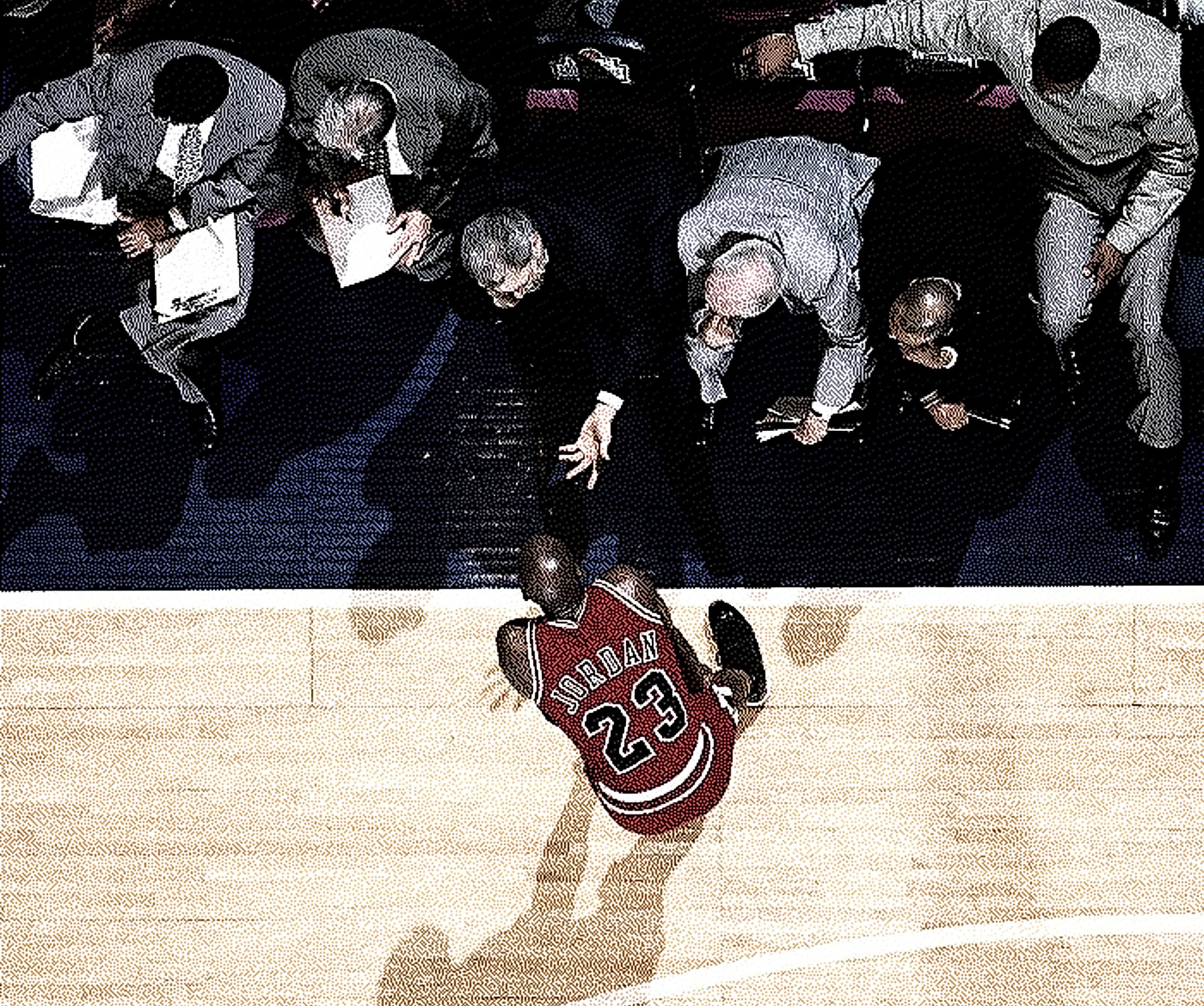
Michael Jordan missed more than 9,000 shots in his career. He lost almost 300 games. Twenty-six times he was handed the ball at the last second, with the game on the line, and he missed.
“I’ve failed over and over and over again in my life. And that is why I succeed.”
Think about that for a second. One of the most confident athletes who ever lived defined himself through his failures. He wasn’t confident because he believed he’d make every shot.
He was confident because he had already lived through missing thousands of them. And he kept playing anyway.
Confidence is not belief in success. It is comfort with failure.
That changes everything.
You don’t need to feel ready. You don’t need certainty. You need to stop being afraid of what happens if things go wrong. Because confident people are not people who don’t fail.
They are people who fail and stay in the game.
It’s not a feeling you wait for. It’s evidence you collect, slowly, imperfectly, one uncomfortable moment at a time.
How You Actually Build It
A few years ago, I was on a family vacation in Mexico. And for most of my life up to that point (longer than I’m proud of), I was the kind of person who watched from the edges. Reserved. Careful. Always calculating in my head whether I’d look stupid before I did anything new.
I told myself it was just my personality. That some people were naturally confident and I wasn’t one of them.
In Mexico, I made a different decision.
I said yes to things that made me uncomfortable. Beach football with a group of strangers I had never spoken to. A dance class where I was clearly the worst person in the room. Evening shows. Random conversations. Situations with no guaranteed outcome.
That trip became one of the best decisions of my life. My life got more interesting, more fun, more open. Just because I started collecting evidence that I could handle uncomfortable things. And that evidence, piece by piece, changed how I saw myself.
The only thing I actually did was say yes to opportunities instead of avoiding them. That’s it. That single shift rewired everything.
Jensen Huang is probably the best example of this I can think of.
Before he built one of the most valuable companies on earth, he was a kid from Taiwan who got sent to America and ended up in a reform school in Kentucky.
His uncle misunderstood the school. Jensen was nine. His roommate was seventeen, covered in tattoos, with stab wound scars. He scrubbed toilets. Got beaten up by older kids. Learned to survive in an environment that had nothing to do with silicon chips or billion dollar valuations.
“I don’t get scared often. I can tolerate a lot of discomfort.”
That tolerance became the foundation of everything.
When he started NVIDIA, his first two products were massive failures. NV1 and NV2 flopped so hard he had to cut more than half his team. Over a hundred people down to forty. Most founders would have quit. Jensen kept going.
Then came 2007. He had spent years investing in a technology called CUDA that almost nobody understood yet. His stock price dropped 80%.
His own leaders told him deep learning was a fad and he should change direction. He refused. In 2013, he bet the entire company on artificial intelligence when his own lieutenants were against it. All in. No backup plan.
“Greatness is not intelligence. Greatness comes from character. And character is formed out of people who suffered.”
Today NVIDIA is worth over three trillion dollars. And every morning, Jensen Huang looks in the mirror and says to himself: “You suck.”
That is not a man who feels confident all the time. That is a man who has been through so much failure, so much pressure, so many moments where everything could have ended, that none of it scares him anymore.
His confidence is not about knowing he’ll win. It’s about knowing he can handle losing. And that he’ll still be there the next day, ready to go again.
That is what confidence looks like at the highest level.
Here’s how to start building it:
Find your courage zone. There are three zones: comfort, courage, and panic. You grow in the courage zone, where things feel uncomfortable but not impossible. Don’t start with the hardest thing. Start with the next thing that makes you a little nervous.
Build evidence, not feelings. Albert Bandura spent decades studying what actually builds self-belief.
His answer was almost annoyingly simple: mastery experiences. Doing something hard, surviving it, doing it again. He found them to be the most reliable predictor of confidence that exists.
More reliable than watching someone else succeed. More reliable than positive affirmations. Because your brain trusts your own track record above everything else. Every time you do the uncomfortable thing and survive it, you add a data point.
Over time the evidence overrides the fear. Think about tying your shoes. You weren’t born confident doing it. You just did it so many times it became automatic. The only difference between that and walking into a room full of strangers is repetition.
That’s why someone like Tony Robbins can walk onto a stage in front of 10,000 people and feel completely at home. He wasn’t born with some supernatural ability to command a room. He just did it. Over and over and over again.
Thousands of events. Thousands of stages. Thousands of moments where he had to show up and deliver regardless of how he felt that day. At some point the repetitions stacked up so high that the fear had nothing left to hold onto. The stage became his version of tying shoes.Change the signals you send yourself. Research in embodied cognition (the study of how your body shapes your mind, not just the other way around) shows that upright, expansive posture directly changes how you evaluate yourself.
Not just how others perceive you. Your own self-assessment shifts. Participants who adopted confident physical stances consistently rated themselves higher on leadership and social capability.
Your brain reads the position of your body as data about who you are. So how you stand, speak, and pause in conversation sends a signal, not just to the room but to your own nervous system. Slow down. Don’t rush to fill every silence. Take up space.
These are behaviors, not personality traits. You can start practicing them today.
The Person You’re Becoming
There’s a moment - and you won’t know exactly when it happens - where you stop asking “Will this go okay?” and start asking “What do I actually want here?”
That shift is quiet. From the outside it looks like confidence. From the inside it feels more like ease. Like something that used to cost you a lot of energy now just takes a decision.
You’re not becoming confident. You’re becoming someone who acts despite discomfort. Someone who has enough evidence to know they’ll survive whatever comes next.
That person naturally handles more. Opens more doors. Gets more out of life. Every decision you make in your courage zone expands your courage zone.
This is the actual cheat code. Not a personality trait you were born with or without. A skill. A relationship with failure that you build one uncomfortable decision at a time.
START NOW.
— conduct|r

confidence isn't just built from reps
it's mainly about what the reps mean to your subconscious
two guys can fail the same way. one will see data. and the other one will see proof he was never enough.
it's all about programming, about what was programmed into them before they were old enough to choose
"Every time you hold back, your brain takes a note." 💯